

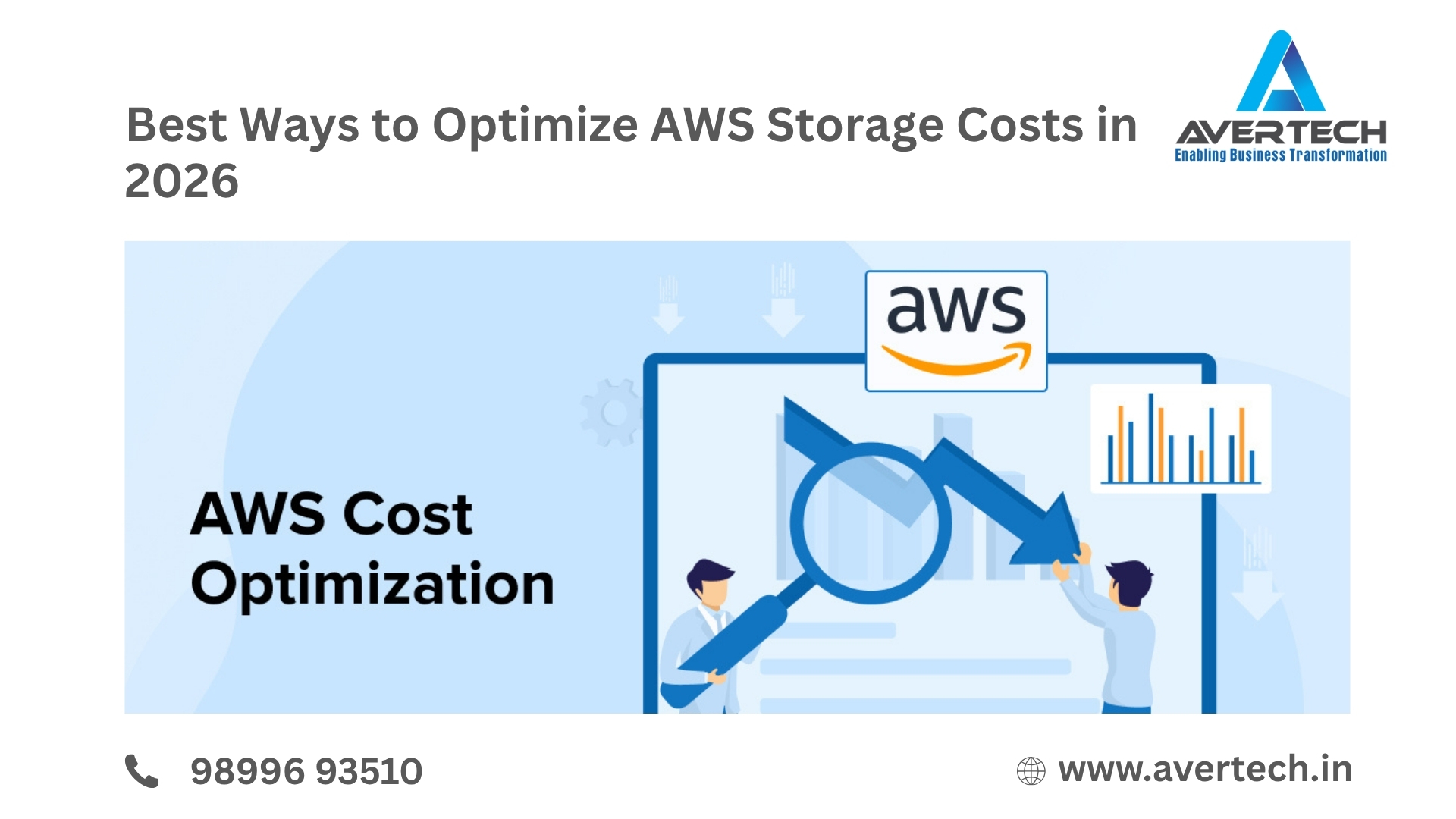
Managing cloud storage costs is one of the most important priorities for organizations today, with businesses continuing to churn out massive amounts of data in 2026. Though AWS has provided a dependable and scalable storage solution for many, businesses continue to grapple with ever-increasing storage costs driven by inefficient resource utilization, duplicate data and sub-optimal data life cycle management.
By collaborating with top AWS managed service providers in Chennai, companies can decrease expenditures and keep their performance, security, and compliance on track. We will review the optimal ways to lower the costs of AWS storage in 2026 and get the most from your investment on the cloud in this blog.
Why AWS Storage Costs Increase Over Time
Many organizations experience unexpected AWS bills because of:
- Unused or orphaned storage volumes
- Overprovisioned storage resources
- Retaining old backups indefinitely
- Storing infrequently accessed data in expensive storage tiers
- Lack of lifecycle management policies
- Duplicate data across environments
Without proper monitoring and optimization, storage costs can grow significantly as business data expands.
1. Choose the Right AWS Storage Class
AWS provides multiple storage classes designed for different access patterns.
Amazon S3 Storage Classes
- S3 Standard — Frequently accessed data
- S3 Intelligent-Tiering — Automatic cost optimization
- S3 Standard-IA — Infrequent access data
- S3 One Zone-IA — Lower-cost infrequent storage
- S3 Glacier Instant Retrieval — Archive data with quick access
- S3 Glacier Flexible Retrieval — Long-term backups
- S3 Glacier Deep Archive — Lowest-cost archival storage
Selecting the appropriate storage class can reduce storage expenses by up to 70% or more.
2. Enable S3 Intelligent-Tiering
One of the smartest ways to optimize storage costs in 2026 is by using S3 Intelligent-Tiering.
Benefits
- Automatically moves data between access tiers
- No performance impact
- Reduces manual management
- Ideal for unpredictable workloads
Organizations with changing data access patterns can achieve substantial savings without constantly monitoring usage.
3. Implement Lifecycle Policies
AWS Lifecycle Policies automatically move data to lower-cost storage tiers or delete obsolete data.
Example Lifecycle Strategy
- Days 0–30: S3 Standard
- Days 31–90: S3 Standard-IA
- Days 91–180: Glacier Instant Retrieval
- Beyond 180 Days: Glacier Deep Archive
This automated approach ensures that storage costs remain optimized throughout the data lifecycle.
4. Identify and Remove Unused EBS Volumes
Amazon Elastic Block Store (EBS) volumes are often left running after instances are terminated.
Common Issues
- Detached EBS volumes
- Unused snapshots
- Overprovisioned disk capacity
Regular audits can eliminate unnecessary expenses and free up valuable resources.
Best Practice
Schedule monthly storage reviews and use AWS Cost Explorer to identify idle resources.
5. Optimize EBS Snapshot Management
Snapshots are critical for backup and disaster recovery, but excessive snapshots can increase storage costs.
Cost Optimization Tips
- Delete obsolete snapshots
- Use incremental snapshots
- Automate retention policies
- Implement backup lifecycle management
A well-defined snapshot strategy can significantly reduce backup-related expenses.
6. Compress and Deduplicate Data
Data compression and deduplication remain effective methods for lowering storage requirements.
Advantages
- Reduced storage footprint
- Faster backups
- Lower transfer costs
- Improved resource efficiency
Many organizations discover that duplicate files account for a significant portion of their cloud storage consumption.
7. Monitor Storage Usage with AWS Cost Management Tools
AWS offers several tools to help organizations understand storage spending.
Essential AWS Tools
- AWS Cost Explorer
- AWS Budgets
- AWS Trusted Advisor
- AWS CloudWatch
- AWS Compute Optimizer
These tools provide insights into storage trends and identify cost-saving opportunities before expenses become excessive.
8. Archive Historical Data
Not all data needs to remain in high-performance storage.
Data Suitable for Archiving
- Compliance records
- Historical logs
- Old customer records
- Legacy application data
- Backup archives
Moving these datasets to Glacier storage classes can deliver substantial long-term savings.
9. Use Storage Analytics and Reporting
Storage analytics helps organizations understand:
- Access frequency
- Data growth patterns
- Storage utilization trends
- Cost distribution
With proper reporting, businesses can make informed decisions about storage allocation and lifecycle policies.
10. Partner with AWS Storage Optimization Experts
Cloud cost optimization requires ongoing monitoring, planning, and governance.
The best AWS managed service providers in Chennai help businesses:
- Analyze storage utilization
- Implement lifecycle policies
- Optimize S3 and EBS costs
- Manage backups efficiently
- Improve cloud governance
- Reduce overall AWS spending
Professional AWS management ensures continuous cost optimization while maintaining performance and security standards.
How Avertech Helps Optimize AWS Storage Costs
At Avertech, we help businesses gain complete visibility into their AWS environment and identify opportunities to reduce unnecessary storage expenses.
Our AWS managed services include:
- AWS storage assessment
- Cost optimization audits
- S3 lifecycle management
- EBS volume optimization
- Backup and disaster recovery planning
- 24/7 monitoring and support
- Security and compliance management
Our cloud experts help organizations achieve better performance while keeping AWS costs under control.
Conclusion
If you don’t manage your resources, costs related to AWS storage can pile up fast. With the effective use of life-cycle policies, selecting appropriate storage classes, archving idle data, managing snapshots wisely and continuous monitoring your resources, you can get huge savings on your cloud expenses in 2026.
By availing the services of top AWS managed service providers in Chennai, organizations can get more out of their AWS infrastructure while also improving control and ensuring significant cost savings in the long run.